Page
CW & Morse
My journey learning CW (Continuous Wave / Morse code). On this page you'll find the most common Q-codes, their meaning and the corresponding Morse. Click ▶ to play the code once.
Reference
Most Common Q-codes
| Code | Meaning | Morse |
|---|
Logbook
My CW Journey
Notes, experiences and milestones while learning Morse code.
Step 01 · Start
Why CW?
CW is the most efficient mode for DX contacts with low power. With just a few watts you can reach the world. The challenge is what excites me.
Step 02 · Method
Koch Method
I use the Koch method: starting with 2 characters at full speed (20 WPM) and only expanding when recognition is above 90%. Farnsworth timing helps a lot.
Step 03 · Tools
LCWO & G4FON
LCWO.net for daily online practice. G4FON Koch Trainer for offline sessions. The goal is at least 15 minutes every day.
In progress
Memorising Q-codes
The Q-codes on this page are my first memory aid. By listening to them repeatedly I want to learn to recognise them automatically on the band.
Tip
Listening on the band
Listening on 40m CW (7.000–7.040 MHz) every day to hear real QSOs. Start by recognising callsigns and RST reports.
Goal
First CW QSO
The ultimate goal: completing a full CW QSO — exchanging callsign, report, name and QTH. Every day one step closer to this milestone.
Gear
Material
The hardware I use to practise and learn CW.
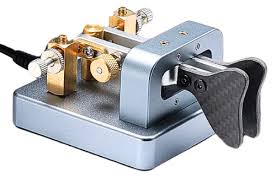
Iambic Paddle · Practice
Xiegu VK-6 Iambic Paddle
CNC-machined aluminium dual-paddle with magnetic return system and carbon fibre paddles. Independently adjustable tension & spacing. Standard 3.5mm TRS plug — works directly with the G90, X6100 and most modern HF rigs. Excellent beginners paddle at an accessible price point.
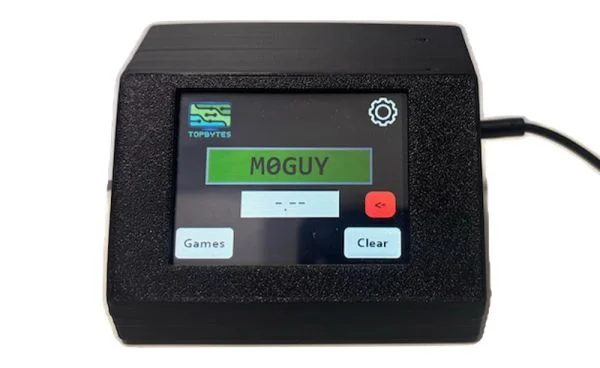
CW Trainer · All-in-one
TopBytes Morse Trainer v2
Compact British-made all-in-one CW training device with colour touchscreen, built-in rechargeable battery (USB-C) and Wi-Fi for OTA firmware updates. Supports straight keys and paddles via 3.5mm input. Built-in games, Koch method, character decode display — perfect for daily practice sessions anywhere.